Storms do not check calendars. A saturated root plate lets go at 3 a.m., a hangar splits along an old lightning scar over a driveway, or a wind snap leaves a trunk leaning into utility lines. When trees fail, the difference between a close call and a catastrophe often comes down to how fast the right https://waylonlylj953.timeforchangecounselling.com/on-call-emergency-tree-services-when-you-need-them crew gets to the site and how they work once they arrive. “Right” in this context is not a slogan. It means licensed and insured, seasoned with real emergency field time, and backed by a Certified Arborist who understands both tree biology and job hazard analysis.
As someone who has spent years walking yards after wind events, meeting homeowners under headlamps and tracing load paths with a chalk line on bark, I have learned that emergency tree work is part triage, part engineering, and part choreography. The job is to make a dangerous scene predictable, then safe, and only then neat. That sequence matters.
What “licensed and insured” really covers
Those words get tossed around in ads, but in emergency tree work they have teeth. Licensing varies by municipality or province. In many regions it verifies that the business meets local codes, carries required credentials, and can pull permits where necessary. Insurance is the critical backstop. At minimum, a credible firm carries:
- General liability that covers property damage, not only during routine pruning but also during complex removals over structures. Workers’ compensation that protects both the crew and the client if a climber is injured on site. Commercial auto for trucks and loaders that will be moving through tight neighborhoods. Often, an umbrella policy to capture edge cases, such as crane operations near public ways.
If you ever doubt this matters, picture a rented skid loader with forks puncturing a paver patio while nudging a trunk round. With proper coverage and documentation, it is an inconvenience and some paperwork. Without it, the homeowner is often left to their own insurer and a deductible, and the crew might be gone by sunrise.
The first hour sets the tone
Emergency Tree Services begin with situational awareness, not saws. A good crew does three things immediately. First, they stabilize the scene by isolating the drop zone and rerouting foot traffic. Second, they identify utilities that change the rules, such as energized conductors, buried service, and gas meters. Third, they assess the tree and debris for stored energy. A split stem wedged between a fence and roof carries torsion you cannot see. A log bridging a hedge may spring like a bow. The longest bar in the truck will not fix a misread load path.
During our busiest wind season, we often cover five to ten emergency calls in a night. The success rate correlates with how cleanly the crew chief runs the first hour. If we have access, the crane sits where its outriggers land square, the chipper angles for straight feed, and the mini skid has a planned egress path. If not, we reconsider method, because recovery is slower than restraint.
Dangerous Tree Assessment and Removal
There is no single recipe for Dangerous Tree Assessment and Removal. I think in layers. The first layer is site risk: egress routes, lighting, footing, neighbors, animals, and weather still moving through. The second is tree structure: root stability, stem integrity, points of compression and tension, and history of cuts or defects. The third is target: what matters most in the fall zone right now. The fourth is method: which tool or combination reduces risk fastest, without compounding it.
Examples help. After an ice storm, we arrived to find a silver maple that had barber-chaired nineteen feet up, the top hung in a frosty snarl over a garage. The garage had a twenty year old slate roof the owner prized, and the driveway was a sheet of ice. A straight fell would have been faster but would have destroyed the roof. We set up a 38 ton crane on the street where the deck could bear, slung the hung top with a double wrap choker and a tagline, and transferred load in three increments. A climber made two surgical relief cuts, each less than three inches, with the crane operator feathering pressure until the wood gave with a sigh. The top came free without a shake, we lowered to the street, and the garage took not a shingle out of place.
The lesson is not “use a crane,” it is “choose methods that remove uncertainty.” Sometimes that means a highline and a porter wrap. Sometimes it is a wheeled loader with a grapple and a plywood road. Sometimes it is a climber with a 20 inch bar and the patience to set three redirect points and a tensioned speed line.
Working near utilities requires a different playbook
Electric lines change everything. If you suspect a line is energized or see arcing, you do not cut. You secure the area, call the power company’s emergency number, and wait. Even trained line clearance arborists abide by minimum approach distances based on voltage classes. The same caution applies to telecom and fiber, which will not kill you but can create community outage costs. Gas service needs sniffers and shutoff coordination, not guesswork with a saw.
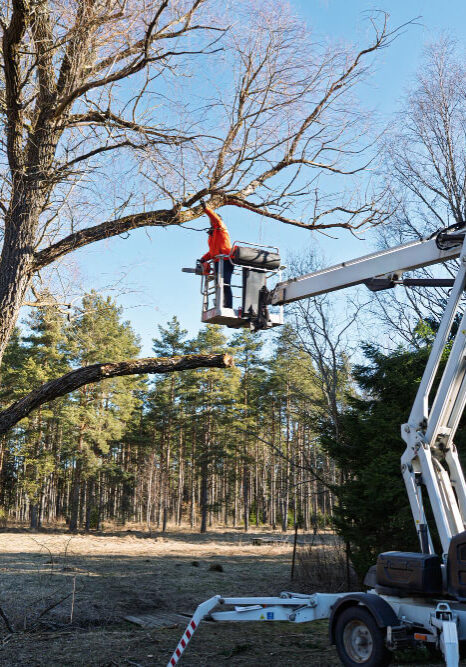
Crews that routinely perform emergency work maintain relationships with utility dispatchers. When you can get a call routed to a duty supervisor and not a general hotline, time shortens. We keep laminated maps of feeder circuits, not to touch them, but to foresee access closures for bucket trucks that may arrive after us.
The role of a Certified Arborist Consultation under pressure
Emergency does not erase biology. A Certified Arborist Consultation is more than a checkbox. A credentialed pro can read a crack and tell whether the failure points to chronic decay, a discrete lightning strike, or sudden overload from wind or ice. That diagnosis influences whether you remove one tree or several, whether you prescribe Tree Cable and Bracing for a twin leader that remains, or whether you advise a phased plan that starts with immediate mitigation and ends with Tree Pruning & Crown Shaping during the growing season.
Homeowners often ask if a damaged tree can be saved. The honest answer is sometimes. If the root plate is tipped and the trunk leans more than, say, 30 degrees, recovery is unlikely and dangerous to attempt. If a leader has failed but a strong lateral remains, a bracing and reduction prune may restore acceptable risk. The arborist weighs not just what is possible, but what is sensible given wind exposure, soil, and occupancy. It is never a sin to remove a tree that can be replaced, but it is a mistake to save one that will keep people nervous every storm.
How crews stage tools for speed and safety
Time compresses on a dark street with rain in your collar. We preload trucks with predictable kits because hunting for a missing ground pad wastes minutes we do not have. On every emergency call, we expect to deploy:
- Headlamps, scene lighting, and extra batteries to move the job from shadows to daylight clarity. Traffic control, such as cones, foldable signs, and reflective vests, because a distracted driver is the threat you never see coming. Rigging, including blocks, slings, prusiks, mechanical advantage kits, and at least two friction devices. We also carry throw lines and weights for first pitch access. Cutting tools that range from top handle saws to mid size ground saws, a long bar for ripping, and handsaws for precise cuts on high tension fibers. Ground protection such as plywood and mats to keep lawns intact and give machines traction.
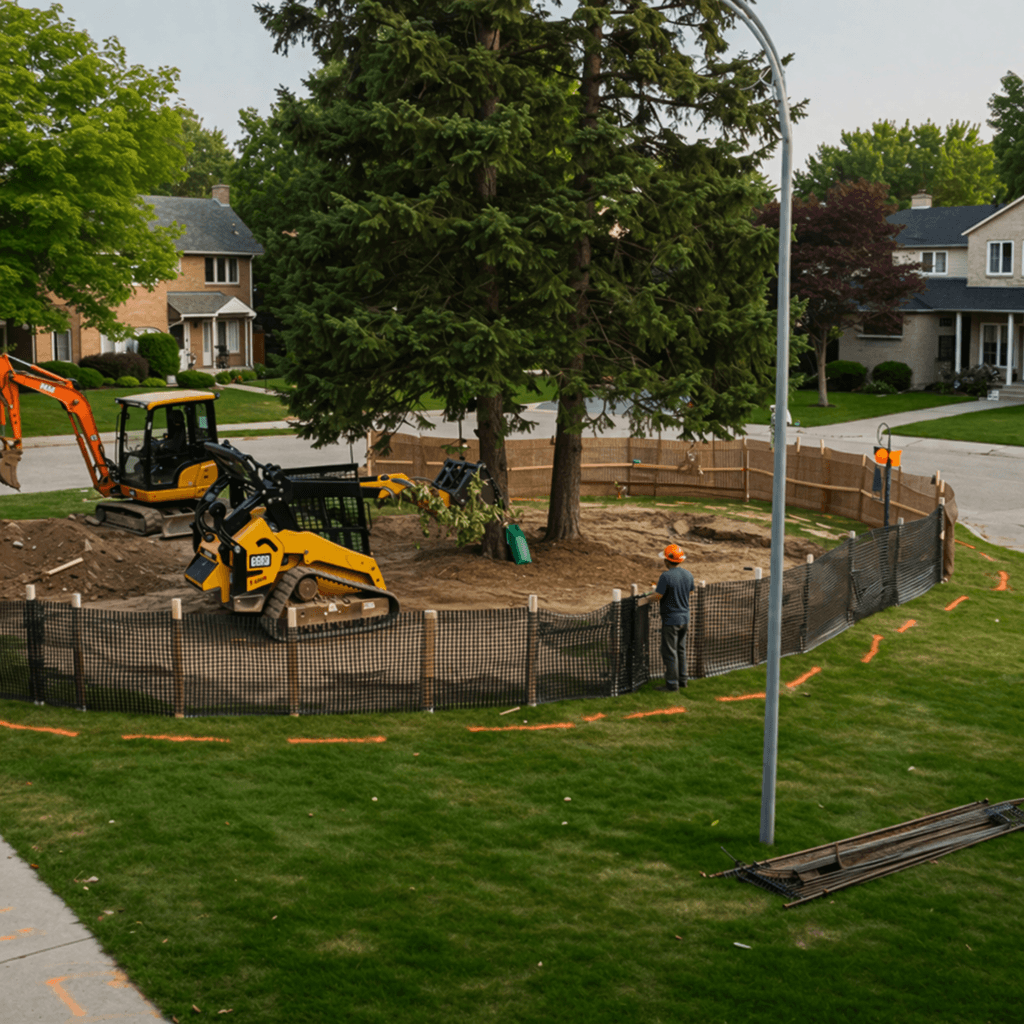
That kit gets tailored to the site. For a tight courtyard, the mini comes off the trailer last, because it might not fit and wheelbarrows may trump horsepower. For backyard pool decks, we lay padding so spike feet from sawyers and stabilizers do not chew through composite boards.
When removals are the right call
Tree Removal Services are never the opening bid, but sometimes they are the only safe outcome. The key is to frame the decision with risk clarity, not just aesthetics. A decayed stem that fails during a party is not only a roof repair, it is paramedics and a lifetime of what ifs. I have removed heritage oaks that broke hearts because their bases had more air than wood. We documented with a resistograph, explained the margins in writing, and built a replacement plan that restored shade in time with a group of staggered plantings.
Removal technique in emergencies diverges from planned work. We often do mechanical disassembly over hand rigging, especially if the target zone is already compromised. Cranes are force multipliers but require certified operators, daylight when possible, and firm setup. Night crane work is possible, but only if the team has done it before and the loading diagrams are conservative.
What happens after the cut
When the last piece is on the ground, the job is half done. Shingles need inspection, tarps go up, and temporary bracing sometimes shores a deck or railing. Brush moves to the chipper in orderly stacks. The site gets a magnet sweep for nails and fasteners, particularly where fence sections came down. Communication stays specific. We tell clients what we did, what we found, what might have been hidden under the debris, and what we recommend for follow up.
Stump Removal & Grinding often happens during the return visit, not the emergency night, especially if buried utilities or irrigation lines need to be located first. A clean grind, down 6 to 12 inches depending on root flare, reduces trip hazards and discourages pests. We mark low voltage lighting and sprinkler heads with flags before the grinder touches turf. If you have ever chased a cut wire at dusk, you learn that fifteen minutes of marking beats two hours of repairs.
Stabilization without removal
Not every emergency requires a saw. I remember a split leader on a mature tulip poplar that opened six inches after a shear gust, the two halves held by wood fibers that looked like frayed rope. The tree was structurally beautiful aside from the wound. The owner loved it, the yard traffic was low, and we had options. We installed a triad of static cables high in the canopy and a through bolt with a sleeve at the split for compression. Then we implemented a reduction prune on both leaders to reduce sail by about 15 percent. Tree Cable and Bracing is not a forever fix, but in the right hands it buys years of safe life. We inspect annually and retension if needed.
This is where Tree Pruning & Crown Shaping does more than look tidy. A thoughtful reduction prune alters wind loading patterns and can remove deadwood that would otherwise rain down during the next storm. It also brings the canopy into a form that pairs well with bracing hardware. Bad pruning, such as over thinning or topping, creates hazards and stress that show up later.
FireSmart Tree Services in the shoulder season
In wildland urban interface areas, the emergency most likely to develop is not wind but fire. FireSmart Tree Services center on defensible space, fuel breaks, and ladder fuel reduction. We spend winter and early spring days pruning up conifers to raise crown base height, spacing shrubs so fire cannot climb into canopies, and removing dying or resinous species that invite ember ignition next to structures. The work is not heavy on drama, but in late summer when red flag warnings hit, these measures pay off.
I have seen houses spared because a client agreed to remove just two trees within ten feet of the siding and replace bark mulch with gravel. The wind threw embers that smoldered harmlessly on stone instead of catching in shredded bark. The same property had gutters cleared and limbs kept off the roof by three feet. All small details, all decisive when the air turns brown.
Coordinating with insurers and permitting authorities
After a storm, phones ring and adjusters juggle dozens of claims. A prepared tree service understands the cadence. We provide time stamped photos, a short narrative, and clear invoices that separate emergency mitigation from later restorative work. That helps clients secure coverage quickly. We also advise when a permit is required for street closures, heritage tree removal, or crane setup. You do not want to find out that your chosen company lacks the authority to block a lane after the police arrive to ask why two cones are protecting a 40 foot boom.
Pricing that respects urgency and transparency
Emergency work carries premiums because it disrupts schedules, demands overtime, and exposes crews to higher risk. That said, pricing should be predictable and tied to scope. We typically estimate based on crew size, equipment roster, expected hours, and access. Sometimes we operate under time and materials with caps, especially when conditions are too complex to bid blind. Clear terms calm anxious clients. Surprises undo trust faster than any nick in a fence.
Choosing a provider before the storm
When skies are clear is the right moment to vet a service. Ask about experience with Emergency Tree Services specifically, not just routine maintenance. Request proof of insurance and review coverage limits. Meet the people, not just the phone voice. It is also fair to ask for references from jobs that sound like yours, such as a removal over a pool or a cleanup under live lines coordinated with a utility.
Here is a brief checklist that helps homeowners prequalify a crew so the first call is easy later:
- Verify licensing in your municipality, and ask whether the company can pull permits for street closures or crane operations. Request certificates of insurance directly from the insurer, with your name listed, so you can see coverage and limits. Confirm a Certified Arborist is on staff and involved in assessments, not only sales. Ask about after hours mobilization times and whether they maintain an on call roster during storm seasons. Discuss equipment access for your property, such as narrow gates, steep driveways, or soft lawns, and how they protect surfaces.
Preparedness at the property level
You can eliminate a lot of chaos by tending to your own site before the weather turns. Arborists do their best work on properties that telegraph where things are and what can be driven on. Label shutoffs. Keep gates operable and hinges free. Make space along driveways for staging if a crane will need to sit. Keep spare tarps, because under a steady rain even the best crew appreciates help keeping a room dry while the last limb clears the roof.
A short homeowner plan goes a long way:
- Keep utility emergency numbers and your tree service contact in one place, both on your fridge and in your phone. Walk your property twice a year to note changes in tree lean, soil heave around trunks, or cracks at branch unions, then schedule a Certified Arborist Consultation if you see concerns. Clear access routes by trimming hedges and moving storage that narrows gates, so equipment can reach the work quickly without damage. Mark irrigation valves, low voltage lighting, and shallow utilities with flags you can place when a crew is en route. Photograph your property exterior annually, so you have a record for insurers and a baseline for pre storm conditions.
Integrating emergency work with long term care
An emergency call often reveals deferred maintenance. After the chips settle, the smartest clients use that moment to plan. We walk the yard and map priorities. Perhaps the front oak needs a reduction on a heavy limb over the neighbor’s driveway. Maybe the white birches are declining and should be replaced with species that handle hot summers better. Sometimes the answer is simple, such as scheduling routine deadwood removal and structural pruning on a three year cycle.
Tree care that prevents emergencies is never glamorous, but it is the cheapest and safest path. Tree Pruning & Crown Shaping on young trees sets their structure for life. A cable well placed in a maturing codominant stem reduces risk exponentially. Periodic inspections catch fungal fruiting bodies at the base long before the wood honeycombs. None of this is dramatic. All of it is effective.
Edge cases and judgment calls
Every season brings a situation that humbles you. We once faced a storm split cottonwood embedded with an old fence post and a tangle of rusty wire. Chains grabbed, sparks flew, and every cut threatened a kickback. We switched to a demolition saw with an abrasive blade for the first passes to expose clean wood, then returned to chain with a fresh sprocket and guard. Slower, safer. Another time, a compromised tree housed an active raptor nest. The law, and ethics, required that we coordinate with wildlife authorities. We stabilized with temporary supports and returned after fledging, then removed the hollowed trunk.
These are not the majority, but they illustrate why you hire judgment, not just horsepower. A team steeped in practice knows when to pause, when to change tools, and when to call another professional.
The often overlooked finish work
Neighbors notice how a site looks at dawn after the trucks leave. A professional crew rakes the last chips off the grass, sweeps the curb, and checks in with the client about any remaining hazards. If a section of fence came down for access, it gets reassembled as best as possible or secured with temporary panels. We also flag uneven ground where the stump grind will happen later and place a small note for delivery drivers. The client should feel that, despite the mess a tree made, people were in control and respectful.
Bringing it all together
Emergency tree work is not a niche, it is the discipline that tests everything else you claim to be good at. It compresses diagnostics, rigging, communication, and cleanup into hours when sleep would be nicer. Licensed and insured is the ticket to the game, not the trophy. What wins the night is preparation, the humility to change plans on the fly, and the habit of making safe choices when speed tempts shortcuts.
When you screen providers, look beyond marketing and into process. Ask how they run that first hour. Listen for specifics, not platitudes. Make sure they can deliver the full spectrum that emergency scenarios often require, from Dangerous Tree Assessment and Removal to Tree Cable and Bracing, from Stump Removal & Grinding to FireSmart Tree Services in quieter months. A firm that can connect those dots, guided by a Certified Arborist Consultation at the right moments, will not only handle the storm at your place, it will help you avoid the next one.
Ace Tree Services Ltd.
Name: Ace Tree Services Ltd.Address: 4656 Wallace Hill Road, Kelowna, BC
Postal code: V1W 4C2
Phone: 250-212-9593
Website: https://acetree.ca/
Hours:
Monday: 7:00 AM - 5:00 PM
Tuesday: 7:00 AM - 5:00 PM
Wednesday: 7:00 AM - 5:00 PM
Thursday: 7:00 AM - 5:00 PM
Friday: 7:00 AM - 5:00 PM
Saturday: 7:00 AM - 5:00 PM
Sunday: Closed
Open-location code (plus code): RHF8+8G Kelowna, British Columbia, Canada
Map/listing URL: https://www.google.com/maps/place/Ace+Tree+Services+Ltd./@49.8232606,-119.4337283,659m/data=!3m2!1e3!4b1!4m6!3m5!1s0x537d8b1d074815c5:0x450b88afa7a41435!8m2!3d49.8232606!4d-119.4337283!16s%2Fg%2F11ydkpnh22
Embed iframe:
"@context": "https://schema.org", "@type": "HomeAndConstructionBusiness", "name": "Ace Tree Services Ltd.", "url": "https://acetree.ca/", "telephone": "250-212-9593", "address": "@type": "PostalAddress", "streetAddress": "4656 Wallace Hill Road", "addressLocality": "Kelowna", "addressRegion": "BC", "addressCountry": "CA" , "openingHoursSpecification": [ "@type": "OpeningHoursSpecification", "dayOfWeek": "https://schema.org/Monday", "opens": "07:00", "closes": "17:00" , "@type": "OpeningHoursSpecification", "dayOfWeek": "https://schema.org/Tuesday", "opens": "07:00", "closes": "17:00" , "@type": "OpeningHoursSpecification", "dayOfWeek": "https://schema.org/Wednesday", "opens": "07:00", "closes": "17:00" , "@type": "OpeningHoursSpecification", "dayOfWeek": "https://schema.org/Thursday", "opens": "07:00", "closes": "17:00" , "@type": "OpeningHoursSpecification", "dayOfWeek": "https://schema.org/Friday", "opens": "07:00", "closes": "17:00" ], "geo": "@type": "GeoCoordinates", "latitude": 49.8232606, "longitude": -119.4337283 , "hasMap": "https://www.google.com/maps/place/Ace+Tree+Services+Ltd./@49.8232606,-119.4337283,659m/data=!3m2!1e3!4b1!4m6!3m5!1s0x537d8b1d074815c5:0x450b88afa7a41435!8m2!3d49.8232606!4d-119.4337283!16s%2Fg%2F11ydkpnh22"
Ace Tree Services Ltd. provides professional tree removal, pruning, stump grinding, emergency response, and arborist consultations for properties in Kelowna and across the Okanagan Valley.
The company works with homes, commercial properties, and municipal settings where tree work needs to be planned carefully around buildings, fences, driveways, landscaping, and other site constraints.
Based in Kelowna, the team is positioned to help nearby neighbourhoods and surrounding Okanagan communities with routine tree care and time-sensitive storm cleanup.
Customers looking for careful tree work often want a crew with certified arborist training, insurance, and a methodical approach to higher-risk removals.
Services also include dangerous tree assessment, cabling and bracing, and wildfire risk reduction tree work for properties that need longer-term planning.
To request a quote or discuss tree care options, call 250-212-9593 or visit https://acetree.ca/.
A public map listing is available to help customers confirm the business location and get directions before a site visit or estimate.
For Kelowna property owners who need pruning, removals, or emergency tree help, a local tree service can make it easier to schedule site-specific recommendations and cleanup.
Popular Questions About Ace Tree Services Ltd.
What services does Ace Tree Services Ltd. provide?Ace Tree Services Ltd. lists tree removal, stump removal and grinding, tree pruning and crown shaping, emergency tree service, arborist consultation, dangerous tree assessment and removal, cabling and bracing, and wildfire risk reduction tree work.
Who does Ace Tree Services Ltd. serve?
The company describes its work as serving homes, businesses, and municipalities in Kelowna and across the Okanagan Valley.
Is emergency tree help available?
Yes. Emergency service is listed for downed or uprooted trees, dangerous tree assessment, stabilization work, and branch cleanup. If a tree is near power lines, the safest first step is to stay clear and contact the utility provider before any tree work begins.
Do I always need a permit to remove a tree?
Not always. Permit requirements can depend on where the tree is located and whether it is near a creek, lake, steep slope, or another protected area. It is best to check local rules for the specific property before removal work starts.
How deep does stump grinding usually go?
Standard stump grinding is typically described as going about 6 to 12 inches below ground level, which is often enough for grass or surface landscaping. Deeper grinding may be possible when site plans call for it.
How much of a tree can be safely removed at one time?
That depends on the species, age, health, and structure of the tree. In practice, good pruning is usually about removing the right limbs for health, clearance, and structure rather than chasing a fixed percentage.
What are common signs that a tree may be dangerous?
Large dead limbs, visible cracks, a new lean, root damage, canopy dieback, or storm-related damage can all be warning signs. Trees near structures deserve extra attention when any of those issues appear.
What is cabling and bracing in tree care?
Cabling and bracing are support systems used to reduce the risk of failure in trees with structural weaknesses that may still be worth preserving. They are generally used to add support, not to replace good assessment and ongoing maintenance.
How do I contact Ace Tree Services Ltd.?
Call 250-212-9593.Website: https://acetree.ca/.
Landmarks Near Kelowna, BC
Downtown KelownaThe downtown core is a practical reference point for lakefront neighbourhoods, mixed-use streets, and central residential properties. If your property is near downtown, tree pruning, removals, and cleanup can be planned around tighter access and nearby structures.
Knox Mountain Park
This well-known park north of downtown is a recognizable landmark for nearby homes and hillside properties. If you are close to this area, ask about tree assessment, trimming, or removal work suited to sloped sites.
Mission Creek Greenway
The greenway runs through several parts of Kelowna and is a useful landmark for nearby residential areas. If your property borders or sits near this corridor, site-specific tree planning is especially important.
Pandosy Village
Pandosy is one of Kelowna’s most recognizable neighbourhoods and a common reference point for south-central properties. If you are nearby, request help for pruning, removals, or storm cleanup around homes and small commercial sites.
Rutland
Rutland is a major east Kelowna neighbourhood with a mix of residential and local commercial properties. If you are located in or near Rutland, tree work can be scheduled for both routine maintenance and urgent situations.
Landmark District
This central business-focused area is a practical landmark for offices, service properties, and nearby residential streets. If your site is near the district, ask about careful tree work around parking, access lanes, and built-up lots.
Kelowna’s North End
The North End sits on the edge of downtown and is a useful reference for nearby homes, industrial sites, and commercial properties. If you are in this part of the city, request tree care based on the layout and constraints of the lot.
Airport District
The Airport District is a recognizable north Kelowna reference point for surrounding properties and access routes. If you are in this area, ask about tree services for residential acreage, commercial sites, or roadside cleanup needs.
Glenmore & Dilworth
These established Kelowna neighbourhoods are useful landmarks for central and north-central service calls. If your property is nearby, pruning and removal work can be tailored to mature trees and established landscapes.
Highway 97 Corridor
Highway 97 is one of the city’s main travel routes and a common way to describe location within Kelowna. If your home or property is just off the corridor, a clear landmark reference can help speed up quote scheduling and site planning.